SMC K50-MP1.0-N01MS Air Pressure Gauges
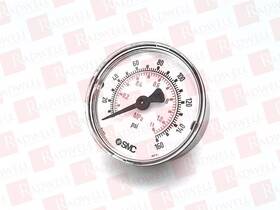
( Brand: Smc ), ( Manufacturer Part Number: K50-MP1.0-N01MS ), ( Part Type: Pressure Gauge )
Review SMC K50mp10n01ms New
The **SMC K50-MP1.0-N01MS (K50MP10N01MS)** is a high-performance, compact pneumatic valve manifold designed for precision control in industrial automation and fluid handling applications. Part of SMC s advanced **K50 series**, this modular system integrates seamlessly into modern manufacturing and process control environments, offering unmatched reliability and adaptability. Engineered with a **1.0-inch (25 mm) port size**, the K50-MP1.0-N01MS provides robust flow capacity while maintaining a compact footprint, making it ideal for space-constrained installations. Its **N01MS designation** signifies a **normally closed, pilot-operated design**, ensuring energy efficiency by minimizing air consumption when inactive. The manifold features **SMC s proprietary Quick Connect (QC) fittings**, which simplify installation, reduce downtime, and enhance system flexibility by allowing quick adjustments or replacements without specialized tools. Constructed from durable **aluminum alloy**, the housing is lightweight yet robust, resistant to corrosion and wear, and capable of withstanding operating pressures up to **10 bar (145 psi)**, ensuring long-term performance in demanding environments. The integrated **pilot control system** enables precise on/off operation with minimal leakage, making it suitable for applications requiring tight regulation, such as packaging machinery, material handling systems, or automated assembly lines. Additionally, the K50 series supports **SMC s advanced digital communication protocols**, including **SMC s proprietary IO-Link and Ethernet/IP interfaces**, allowing for seamless integration with PLCs, SCADA systems, and Industry 4.0 platforms. This enhances real-time monitoring, predictive maintenance, and automated diagnostics, reducing operational inefficiencies and improving overall system uptime. Whether deployed in food and beverage processing, automotive manufacturing, or pharmaceutical production, the K50-MP1.0-N01MS delivers consistent performance with minimal maintenance, making it a cornerstone for modern pneumatic automation solutions.
The **SMC K50-MP1.0-N01MS** (or **K50MP10N01MS**) is a mid-range, multi-purpose industrial robot designed for applications like pick-and-place, assembly, packaging, and material handling. Below is a detailed breakdown of its pros and cons, followed by a conclusion and recommendation.
---
### **Pros of the SMC K50-MP1.0-N01MS**
1. **Compact and Lightweight Design**
The robot is relatively small and lightweight (payload: 1.0 kg, reach: 500 mm), making it ideal for applications with limited workspace or where space efficiency is critical. Its compact form factor allows for easy integration into existing production lines without requiring major facility modifications.
2. **High Precision and Repeatability**
With a repeatability of 0.05 mm, the K50-MP1.0 is suitable for tasks requiring fine motor control, such as precise part placement, screw driving, or small component handling. This level of accuracy is beneficial in industries like electronics assembly, pharmaceutical packaging, or food processing where consistency is paramount.
3. **Versatile Articulation and Range of Motion**
The 6-axis SCARA (Selective Compliance Assembly Robot Arm) configuration provides a wide range of motion, including vertical, horizontal, and rotational movements. This versatility allows it to handle tasks that require complex trajectories, such as pick-and-place operations with varying orientations or 3D part handling. The robot s ability to move quickly and accurately in multiple planes makes it adaptable to a variety of applications.
4. **High Speed and Efficiency**
The K50-MP1.0 is designed for high-speed operations, with cycle times optimized for repetitive tasks. This makes it well-suited for high-volume production environments where throughput is a key performance metric. The robot s speed can help reduce labor costs and increase productivity, especially in industries like automotive parts assembly or consumer goods packaging.
5. **Easy Programming and User-Friendly Interface**
SMC robots are known for their intuitive programming tools, including teach pendant interfaces and software like **SMC Robot Studio** or **SMC Motion Controller**. The K50-MP1.0 can be programmed using simple point-to-point (PTP) or continuous path (CP) motions, making it accessible for operators with minimal robotics experience. Additionally, SMC provides libraries of pre-written routines for common tasks, further simplifying programming.
6. **Modular and Customizable**
The robot can be equipped with various end-effectors, grippers, or vision systems to suit specific applications. SMC offers a range of compatible accessories, including vacuum grippers, parallel grippers, and custom tooling. This modularity allows users to adapt the robot to different tasks without significant hardware changes. The N01MS variant may also include integrated vision capabilities or force sensing, depending on the model specifications.
7. **Reliability and Low Maintenance**
SMC robots are built with durability in mind, featuring sealed joints, corrosion-resistant materials, and robust drive systems. The K50-MP1.0 is designed for continuous operation, reducing downtime and maintenance requirements. This reliability is particularly valuable in 24/7 production environments where unplanned stops can be costly.
8. **Cost-Effective for Mid-Range Applications**
Compared to larger industrial robots (e.g., 6-axis articulated arms) or high-end SCARA robots, the K50-MP1.0 offers a balanced combination of performance and affordability. It is often a cost-effective solution for small to medium-sized businesses or startups looking to automate repetitive tasks without investing in a premium robot.
9. **Compatibility with SMC s Ecosystem**
The robot integrates seamlessly with other SMC products, such as servo motors, controllers, and vision systems. This compatibility simplifies system integration and reduces the need for third-party components, potentially lowering total cost of ownership (TCO). SMC also provides technical support and training, which can be valuable for users new to robotics.
10. **Safety Features**
The K50-MP1.0 includes safety features such as emergency stop functionality, speed monitoring, and the ability to operate in collaboration with human workers (depending on the application and safety guards). SMC robots are designed with safety in mind, adhering to standards like ISO 10218 and CE certification, which is important for compliance in regulated industries.
---
### **Cons of the SMC K50-MP1.0-N01MS**
1. **Limited Payload Capacity**
With a maximum payload of 1.0 kg, the robot is not suitable for heavy-duty applications, such as lifting large metal parts, bulky components, or materials with significant weight. For tasks requiring higher payloads, users may need to consider larger robots (e.g., 2 5 kg payload) or additional mechanical assistance (e.g., conveyor systems or external supports).
2. **Reach and Work Envelope Limitations**
The robot s reach of approximately 500 mm restricts its ability to handle parts located outside its immediate workspace. This limitation may require additional positioning systems (e.g., conveyors, sorters, or feeders) to bring parts within the robot s range. For applications requiring longer reach or larger work envelopes, a different robot model (e.g., a 6-axis articulated arm) may be more appropriate.
3. **Not Ideal for Complex 3D Tasks**
While the K50-MP1.0 can handle some 3D movements, its SCARA design is optimized for planar or near-planar operations. For highly complex 3D trajectories (e.g., welding, polishing, or assembly tasks requiring intricate orientations), a 6-axis articulated robot may be more suitable due to its greater degrees of freedom.
4. **Dependence on External Systems**
In many applications, the robot will require additional hardware to function effectively. For example:- **Feeding systems** (e.g., vibratory bowls, linear feeders) to supply parts to the robot.
- **Vision systems** for part identification, alignment, or quality inspection.
- **Conveyors or sorters** to manage inbound and outbound materials.
These dependencies can increase the overall system cost and complexity, particularly for users without existing automation infrastructure.
5. **Programming Complexity for Advanced Tasks**
While the robot is user-friendly for basic pick-and-place operations, more complex tasks (e.g., adaptive gripping, dynamic path planning, or real-time collision avoidance) may require advanced programming knowledge or additional software tools. Users may need to invest time in training or hire specialized personnel to fully utilize the robot s capabilities.
6. **Limited Collaboration Capabilities**
While the K50-MP1.0 can operate in shared spaces with human workers, true collaborative robotics (cobots) typically require additional safety certifications, force sensing, and compliance with ISO/TS 15066 standards. For applications where humans and robots work closely together, a dedicated cobot (e.g., from Universal Robots or ABB) may be a better fit.
7. **Software and Support Dependencies**
SMC s software ecosystem, while functional, may not be as robust or user-friendly as those offered by larger robotics manufacturers (e.g., ABB RobotStudio, Fanuc Pendants, or KUKA.smartPAD). Users may encounter limitations in offline programming, simulation, or advanced motion planning. Additionally, support for SMC robots may be less extensive compared to industry giants, which could impact troubleshooting and maintenance.
8. **Integration Challenges with Non-SMC Systems**
If the robot needs to interface with non-SMC controllers, PLCs, or vision systems, compatibility issues may arise. Users may require additional gateways, protocols, or middleware to ensure seamless communication, adding complexity to the system setup.
9. **Cost of Accessories and Customization**
While the base robot is affordable, the cost of end-effectors, vision systems, or custom tooling can add up quickly. For example, high-precision grippers or specialized vision cameras may require significant investment, potentially offsetting the robot s initial cost savings.
10. **Scalability Limitations**
The K50-MP1.0 is designed for mid-range applications and may not scale well for high-volume or large-scale production lines. For businesses expecting rapid growth or future expansion, investing in a more scalable or modular robotics platform (e.g., a modular cobot or a larger articulated arm) might be more prudent.
---
### **Conclusion**
The **SMC K50-MP1.0-N01MS** is a well-suited robot for small to medium-sized businesses or applications requiring high-speed, precise, and repetitive tasks within a limited workspace. Its compact size, ease of programming, and versatility make it an attractive option for industries like electronics, packaging, pharmaceuticals, and light material handling. The robot excels in scenarios where space efficiency, speed, and accuracy are prioritized over heavy payloads or complex 3D movements.
However, its limitations such as the 1.0 kg payload restriction, limited reach, and dependence on external systems mean it is not ideal for heavy-duty, large-scale, or highly complex applications. Users should carefully evaluate their specific requirements to determine whether the K50-MP1.0 meets their needs or if a different robot (e.g., a larger SCARA, articulated arm, or cobot) would be more appropriate.
---
### **Recommendation**
**Buy the SMC K50-MP1.0-N01MS if:**- Your application involves **lightweight parts ( 1.0 kg)** with **high precision
Details:
Packaging and Handling: Items are safely ESD packaged in custom shipping cartons for protection. The product is used surplus. Call to use a shipping service other than the ones listed. Part Number K50-MP1.0-N01MS.
All products are guaranteed to be working but may show signs of use.
part #: k50mp10n01ms prices
- $9.72-$19.00
specifications pressureswitchiz:
- brand: Smc
- mpn: K50-mp1.0-n01ms
- part type: Pressure Gauge
general pressureswitchiz:
- Business Industrial > Hydraulics, Pneumatics, Pumps Plumbing > Air Pressure Gauges
- condition: New
offer pressureswitchiz:
- quantity: 10
- availability: In Stock
- options: Ship-to-home
- started: February 13, 2026
- sold: 0
shipping pressureswitchiz:
- service: Standard
- cost: $12.90
- type: Fixed
- class: Standard
- transit: 4-6 Days
returns pressureswitchiz:
- time: 30 Days
- policy: Returns Accepted
- paid by: Buyer
- method: Money back
payments pressureswitchiz:
- wallet: Google-pay
- other
- credit card: Diners-club
seller pressureswitchiz:
- rating: 99.5%
- # reviews: 189956
- city: 1 Millennium Dr, Willingboro, NJ 08046
Smc K50-MP1.0-N01MS Is Similar To:
- 111.12.1.5 Smc Pressure Gauge New (26% similar) If another carrier such as ups or FedEx is required to ship due the size, then shipping costs may change...(November 21st, 2017)
- 4274891 Smc New Pressure Gauge Npt (17.9% similar) 75 x lbs shipping DIMENSIONS:1...(March 21st, 2018)
- Af40-n04c-z Smc Filter Modular Af Mass Pro New Pull (25.3% similar) We combine shipping on multiple orders. Sector equipment. Smc AF40-N04C-Z filter, modular, AF mass pro new pull B3S3 you are buying on. All funds must clear our bank before delivery. Asking questions prior to buying is highly encouraged. Check with us for shipping options and rates. This item came ...(June 19th, 2018)
- Ar40-n04-z-a Smc Npt Modular Psi To Regulator No Gauge Lens New (18.7% similar) We combine shipping on multiple orders. 2 psi to 100 regulator no gauge lens new pull. Asking questions prior to buying is highly encouraged. This item came from a large solar panel manufacturer that closed its production line after it was installed but before being activated. Check with us for ...(June 19th, 2018)
- As1000 Smc Flow Control Valve Thd Lot Of New (29.5% similar) Are stated for each item sale. Next day air can be arranged. No questions asked. Shipping for USA: ups ground. In special cases other methods can be used. Fixed shipping and handling costs. Non-paying bidder alerts will also be filed against buyers...(December 19th, 2018)
- As2200 Smc Flow Control Valve Lot Of New (28.6% similar) Next day air can be arranged. 80SERVO sells high quality surplus electronic equipment and components. No questions asked. Shipping for USA: ups ground. Fixed shipping and handling costs. Are stated for each item sale. In special cases other methods can be used. Non-paying bidder alerts will also be ...(December 19th, 2018)
- As3200 Smc Flow Control Valve Pipe Thd Lot Of New (28% similar) Shipping for USA: ups ground non-paying bidder alerts will also be filed against buyers. No questions asked. In special cases other methods can be used. Fixed shipping and handling costs. Next day air can be arranged. 80SERVO sells high quality surplus electronic equipment and components. Are stated...(December 19th, 2018)
- G36-00-00-3 Smc Lot Of Lens Gauge Without New (27% similar) We combine shipping and handling costs on multiple buys. Please for shipping cost. This listing is for one item at a time only. Automation surplus inc. Lot of 10 Smc G36 lens, gauge without o-ring new in original package, sold as is...(June 1st, 2018)
- G46-00-00-3 Smc Lot Of Lens Gauge Without New (27% similar) Lot of 6 Smc G46 lens, gauge without o-ring new in original package, sold as is. We combine shipping and handling costs on multiple buys. This listing is for one item at a time only. Gets you noticed. Please for shipping cost. Automation surplus inc...(June 1st, 2018)
- Gp46-10-02 Smc 166781 New-no Box (26.3% similar) Item is new, unused, no factory packaging new-no box, Smc GP46 pressure gauge, 0-0. 7MPA, 42MM OD...(September 24th, 2017)
- Gp46-p10-n01m-x30 Smc Air Gauge New (43% similar) If another carrier such as ups or FedEx is required to ship due the size, then shipping costs may change...(May 31st, 2017)