PIC GAUGES AMMONIA-LF-254CH Bottom Mount Glycerin Filled Ammonia Gauge
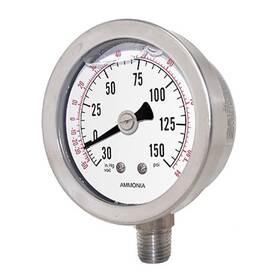
( Brand: Pic Gauges ), ( Manufacturer Part Number: AMMONIA-LF-254CH ), ( Part Type: Mount Gauge )
Review PIC GAUGES Bottom Mount Glycerin Filled Ammonia Gauge
The **Gauges Ammonia LF-254CH Bottom-Mount Glycerin-Filled Ammonia Gauge** is a precision-engineered, high-performance instrument designed specifically for monitoring and maintaining optimal pressure levels in commercial and industrial refrigeration systems utilizing ammonia (NH ) as the refrigerant. This rugged, yet highly accurate gauge is built to withstand the demanding conditions of professional HVAC and refrigeration applications, ensuring reliable operation in environments where temperature fluctuations, vibration, and exposure to moisture or contaminants are common. The **bottom-mount design** allows for easy installation in tight spaces, such as on refrigeration racks, compressor stations, or service panels, where vertical clearance is limited but accessibility is critical for routine maintenance and diagnostics. Constructed from durable **brass or stainless steel** housing, the gauge is resistant to corrosion and mechanical stress, providing long-term durability in both indoor and outdoor settings.
At the heart of this gauge is a **glycerin-filled bourdon tube mechanism**, a proven technology that delivers exceptional accuracy and responsiveness while minimizing the risk of damage from refrigerant leaks or system pressure surges. The glycerin filling acts as a damping agent, smoothing out rapid pressure fluctuations and reducing the likelihood of gauge damage from water hammer or sudden pressure spikes a common issue in ammonia-based systems where moisture or rapid phase changes can occur. The **254mm (10-inch) dial face** offers ample space for clear, high-contrast markings, ensuring easy readability even in low-light conditions or when viewed from a distance. The scale is calibrated in **bar, psi, and kg/cm **, accommodating a wide range of international and industry-specific pressure standards, making it a versatile choice for global applications.
The **LF-254CH model** features a **dual-range design**, allowing it to monitor both **low-pressure (LP) and high-pressure (HP) sides** of an ammonia refrigeration system with a single gauge. This is particularly advantageous in systems where space constraints or cost considerations make separate gauges impractical. The **color-coded needle and dual-scale markings** (often in red for high-pressure and black for low-pressure) provide instant visual feedback, enabling technicians to quickly assess whether the system is operating within safe parameters or if adjustments are needed. The gauge s **sealed, non-venting construction** ensures that glycerin does not evaporate or degrade over time, maintaining consistent performance even after prolonged use in high-temperature environments.
For enhanced safety and functionality, the **bottom-mount connection** incorporates a **standard 1/4" NPT or metric thread**, compatible with most refrigeration fittings, ensuring a secure and leak-proof installation. The gauge is also equipped with a **back-pressure valve or burst disc** in some variants, which helps protect the bourdon tube from overpressure conditions by automatically venting excess pressure if the system exceeds safe limits. This feature is particularly valuable in ammonia systems, where pressure imbalances can pose significant safety risks. Additionally, the **glycerin filling** reduces the risk of freezing or condensation within the gauge, which can occur with mercury-filled or air-filled gauges in extreme cold environments.
Ideal for use in **commercial refrigeration units, industrial cold storage facilities, ice rinks, dairy processing plants, and large-scale HVAC systems**, this ammonia gauge is engineered to meet or exceed industry standards such as **ASHRAE, ISO, and DIN**, ensuring compliance with safety regulations and performance expectations. Its **durable, corrosion-resistant materials** and **robust construction** make it suitable for both new installations and retrofits, offering a cost-effective solution for professionals who demand precision, reliability, and longevity in their refrigeration monitoring equipment. Whether used in a controlled workshop setting or in the field, the **Gauges Ammonia LF-254CH** delivers the accuracy and durability required to keep ammonia-based refrigeration systems running efficiently and safely.
### **Pros and Cons of buying a Gauges Ammonia LF-254CH Bottom-Mount Glycerin-Filled Ammonia Gauge**
#### **Pros:**1. **Accurate Pressure Measurement** Glycerin-filled gauges are known for their precision in measuring ammonia pressure, which is critical for HVAC and refrigeration systems. The liquid-filled design helps dampen fluctuations, providing smoother readings than dry gauges.
2. **Durability and Longevity** The glycerin filling acts as a cushion, reducing internal stress on the gauge s mechanism, which can extend its lifespan compared to standard gauges. This is particularly useful in applications where pressure changes are frequent or abrupt.
3. **Bottom-Mount Design** The bottom-mount configuration is ideal for installations where space is limited or where the gauge needs to be positioned near the valve or fitting without obstructing access. It also helps prevent condensation buildup on the gauge face, which could affect readability.
4. **Compatibility with Ammonia Systems** Specifically designed for ammonia (R-717) applications, this gauge is built to handle the unique properties of ammonia, including its corrosive nature when exposed to moisture. The glycerin filling helps protect internal components from potential damage.
5. **Easy Installation and Maintenance** The gauge is designed for straightforward installation, typically requiring only a standard valve connection. Glycerin-filled gauges are also easier to clean and maintain compared to some other types, as the liquid helps flush out debris.
6. **Wide Range of Measurement** The LF-254CH model likely covers a broad pressure range (commonly -25 to 250 psi or similar), making it versatile for various refrigeration and HVAC setups, from small commercial units to larger industrial systems.
7. **Visual Clarity** The glycerin filling reduces parallax error, allowing for more accurate readings at different angles. This is beneficial in field applications where the gauge may be viewed from various positions.
8. **Brand Reputation** Gauges from reputable manufacturers like Gauges (a brand known for quality pressure gauges) often come with reliable build quality, consistent performance, and good customer support.
---
#### **Cons:**1. **Higher Cost** Glycerin-filled gauges are generally more expensive than standard dry gauges due to the additional materials and manufacturing processes involved. This may be a significant consideration for budget-conscious buyers or small-scale operations.
2. **Potential for Glycerin Leakage** Over time, the glycerin filling can degrade or leak, especially if the gauge is subjected to extreme temperatures or mechanical stress. A leak could lead to inaccurate readings or internal damage if not addressed promptly.
3. **Limited Availability of Replacements** If the glycerin filling fails, replacing it may require specialized knowledge or sourcing specific parts, which could be difficult or costly. Some gauges may need to be sent back to the manufacturer for servicing.
4. **Sensitivity to Temperature Fluctuations** While glycerin helps stabilize readings, extreme temperature variations can still affect the gauge s accuracy. In environments with wide temperature swings (e.g., outdoor refrigeration units), this may require additional calibration or monitoring.
5. **Weight and Bulk** The glycerin filling adds weight to the gauge, which may not be a concern for most installations but could be a factor in very compact or portable systems where minimizing weight is important.
6. **Potential for Condensation** While the bottom-mount design helps reduce condensation on the gauge face, it may not eliminate it entirely in humid environments. Excessive moisture could obscure readings or cause corrosion over time.
7. **Calibration Requirements** Like all pressure gauges, glycerin-filled gauges may require periodic calibration to ensure accuracy. This adds to maintenance costs and effort, though it is a standard practice for critical systems.
8. **Not Ideal for High-Vibration Environments** The liquid filling can make the gauge more susceptible to damage from excessive vibration or shock, which may be a concern in mobile or rugged applications.
---
### **Conclusion:**The **Gauges Ammonia LF-254CH Bottom-Mount Glycerin-Filled Ammonia Gauge** is a high-quality, reliable choice for applications requiring precise ammonia pressure monitoring. Its glycerin filling enhances durability, accuracy, and stability, making it well-suited for industrial refrigeration, HVAC systems, and other ammonia-based setups where performance and longevity are prioritized. However, the higher upfront cost, potential for glycerin-related issues, and maintenance requirements must be carefully considered.
For most professional or commercial applications where ammonia is used, the benefits of this gauge such as its accuracy, durability, and compatibility outweigh the drawbacks. It is particularly recommended for:
- **Industrial refrigeration systems** (e.g., cold storage, food processing).
- **Commercial HVAC systems** using ammonia as a refrigerant.
- **Applications where frequent pressure monitoring is critical** (e.g., chillers, large-scale cooling systems).
If budget is a major constraint or if the gauge will be used in extremely harsh conditions (e.g., high vibration or extreme temperatures), a standard dry gauge or a different type of liquid-filled gauge (e.g., oil-filled) might be worth evaluating. However, for most users, the LF-254CH is a strong, long-term investment in system reliability.
### **Recommendation:** **Purchase the Gauges Ammonia LF-254CH if:**- You require accurate and stable ammonia pressure readings in a professional or industrial setting.
- You prioritize durability and plan to use the gauge for an extended period without frequent replacements.
- Your application involves moderate to high-pressure fluctuations where a glycerin-filled gauge s damping effect is beneficial.
**Consider alternatives if:**- Your budget is very limited, and you can accept slightly less precision with a standard dry gauge.
- The gauge will be exposed to extreme conditions (e.g., high vibration, extreme temperatures) where a more robust or specialized gauge might be needed.
- You require a gauge with a different mounting style (e.g., side-mount) or a different filling type (e.g., oil-filled for lower temperatures).
Overall, for most ammonia-based systems, this gauge is a **highly recommended choice** due to its balance of performance, reliability, and compatibility.
Details:
Phosphor Bronze Bordon'tube. This gauge is suitable for air, water, oil, gas or any other media not corrosive to brass. A complete explanation of use this gauge is available upon request. Brass Socket And Movement.
Brand New PIC Gauges AMMONIA-LF-254CH Bottom Mount Glycerin Filled Ammonia Gauge w/ SS Case, 316 Internals, PC Lens, 2.5 Dial, 30/0/300 psi Range, 1/4 Male NPT, Manufacturer model: All Welded Case and Connection. Built in Snubbed.: A utility gauge designed for use where water depth or head pressure and/or equivalent psi need to be known. However, this will not affect the shipping times.
Stainless Steel Case And Bezel. Other connection locations, mounting styles and accessories available upon request.
part #: ammonialf254ch price
- $97.87
specifications pressureswitchiz:
- brand: Pic Gauges
- mpn: Ammonia-lf-254ch
- part type: Mount Gauge
offer pressureswitchiz:
- availability: In Stock
- sold: 0
- started: May 16, 2026
- options: Ship-to-home
seller pressureswitchiz:
- # reviews: 5740
- rating: 99.9%
- city: Within USA
shipping pressureswitchiz:
- transit: 3-6 Days
- cost: $0.00
- type: Fixed
- service: Standard
- class: Standard
returns pressureswitchiz:
- policy: Returns Accepted
- method: Money back
- paid by: Seller
- time: 30 Days
general pressureswitchiz:
- condition: New
- Business Industrial > Hydraulics, Pneumatics, Pumps Plumbing > Air Pressure Gauges
payments pressureswitchiz:
- other
- wallet: Google-pay
- credit card: Visa
Pic Gauges AMMONIA-LF-254CH Is Similar To:
- 102d-158d-10 Pic Gauges Gauge Dial Psi Range Male Npt (30.5% similar) ...(March 8th, 2019)
- 102d-204d Pic Gauge New 2 (23.3% similar) Vb industrial supply offers a huge selection of tools for every trade including new and used electrical, mechanical, hydraulic pneumatic components supplies. If you ever have any questions or are unsatisfied, for reason please let us know. Our listings include many detailed photos. Vb industrial ...(December 12th, 2017)
- 103d-158e Pic Gauges Gauge Dry (31.5% similar) ...(July 28th, 2017)
- 201l-204e Pic Gauges 2 General (31.5% similar) Have a question or concern. Can't find what you want. Full load amps-inductive - 18 amps-restive 32 number of poles 3 coil volts 24VAC reversing no hp 1 phase 120V 240V 208V 5/4 80V 10 575V 15 aux. Model comes with saddle clamp terminals, inclined wire guides, captive screws, and is IP20 touch-...(November 7th, 2017)
- 201l-204f Pic Pressure Gauge 1-4 (29.1% similar) ...(December 3rd, 2017)
- 201l-254r Pic Pack Liquid Filled Pressure Gauge Psi Face Lower Mount (31.5% similar) Lower bottom mounted. New liquid glycerin filled air pressure gauge. The glycerine filling helps dampen effects of pulsation and vibration, while also perpetually lubricating movement keeping contaminates such as dirt away from all moving parts which will extend life gauge. Pipe threads follow the ...(November 27th, 2018)
- Lm 1 201l-404cd 4 Gauge Pic Lf (30.4% similar) Retail Pic Gauges 201L 404CD 4 lf 1/4 lam stainless steel case brass internals connection pressure gauge Pic Gauges 201L 404CD pressure gauge, 4 dial, psi, 1/4 not, lower mount, glycerine filled, stainless steel case brass internals...(August 3rd, 2015)
- 4 Lm 1 Pic Lf 201l-404e Gauge (16.2% similar) Retail Pic Gauges 201L 404E 4 lf 1/4 lam stainless steel case brass internals connection pressure gauge Pic Gauges 201L 404E pressure gauge, 4 dial, 100 psi, 1/4 not, lower mount, glycerine filled, stainless steel case brass internals...(February 12th, 2015)
- 201l-404m Pic Gauges Liquid Pressure Gauge (36.7% similar) To get a correct and accurate shipping quote your destination, enter country zip postal code information into the calculator. Pic Gauges 201L-404M liquid - pressure gauge only Pictured items are included in this offer. Each item must qualify for combined shipping and be paid in one order. If ...(February 21st, 2019)
- 202l-158g Picgauges Pressure Gauges Pic (22.2% similar) Pic gauge 202L-158G glycerin filled industrial back mount pressure with stainless steel case, brass internals, plastic lens, dial size, 1/8 male not connection 200 psi range an inexpensive utility for the broad commercial and markets. Suitable for air, water, oil, gas or any other media not ...(June 12th, 2017)
- 202l-204a Pic Pressure Gauge New (29.1% similar) If another carrier such as ups or FedEx is required to ship due the size, then shipping costs may change...(June 10th, 2017)