HIGH 20OG4000 Oxygen Regulator Water Pressure Gauge 685867900283 0-4000 Reviews
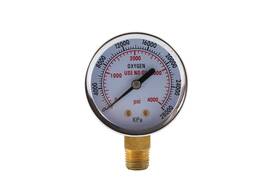
( Brand: High ), ( Manufacturer Part Number: 20OG4000 ), ( Part Type: Pressure Regulator Gauge ), ( Itemheight: 64 ), ( Itemlength: 203 ), ( Itemwidth: 102 ), ( Packageheight: 41 ), ( Packagelength: 125 ), ( Packageweight: 91 ), ( Packagewidth: 76 ), ( Size: 2 High ), ( UPC: 685867900283 )
Review HIGH Pressure Gauge Oxygen Regulator 0-4000 Psi Inches Inch
The **20OG4000 High-Pressure Oxygen Regulator Gauge** is a precision-engineered, industrial-grade instrument designed for critical applications where accurate and reliable pressure monitoring is essential. Built to withstand extreme conditions, this rugged gauge is specifically calibrated for oxygen systems, ensuring safe and efficient operation within a pressure range of **0 to 4000 psi (pounds per square inch)**. Constructed from high-quality **316 stainless steel**, it resists corrosion, oxidation, and thermal fluctuations, making it ideal for use in aerospace, medical oxygen delivery, industrial gas processing, and high-pressure testing environments. The **20OG** designation indicates a **20/80 thread connection**, compatible with standard oxygen regulator fittings, ensuring seamless integration with existing systems while maintaining leak-proof performance under high-pressure conditions.
Featuring a **large, easy-to-read dial with a high-contrast, backlit display**, this gauge provides exceptional visibility even in low-light or high-glare settings, reducing operator fatigue and minimizing the risk of misreading critical pressure levels. The **Bourdon tube mechanism** delivers precise, hysteresis-free measurements with minimal lag, ensuring real-time accuracy for critical applications where even slight deviations could compromise safety. The gauge is equipped with a **durable glass window** reinforced with a protective metal frame, safeguarding against impact, vibration, and environmental contaminants that could otherwise compromise performance. Additionally, its **anti-surge design** prevents erratic needle movement, providing a stable and consistent reading under fluctuating pressure conditions.
For enhanced safety, the **20OG4000** incorporates a **pressure relief valve** and **burst disc protection**, safeguarding against overpressure events that could lead to catastrophic failure. The gauge is also **NPT (National Pipe Thread) compatible**, allowing for flexible installation across various oxygen delivery systems, including medical oxygen tanks, industrial oxygen cylinders, and high-pressure testing rigs. Its **temperature range of -40 F to 250 F (-40 C to 121 C)** ensures reliable operation in both extreme cold and high-heat environments, making it suitable for applications ranging from cryogenic oxygen storage to high-temperature industrial processes.
Built to meet **ASME B40.100 standards** and **DOT/TC specifications**, this gauge undergoes rigorous testing to ensure compliance with strict safety regulations for oxygen service. Its **non-magnetic construction** prevents interference with sensitive electronic equipment, while its **low-maintenance design** minimizes downtime through extended calibration intervals. Whether used in **aerospace oxygen systems, medical oxygen therapy, or industrial gas processing**, the **20OG4000 High-Pressure Oxygen Regulator Gauge** delivers uncompromising performance, durability, and peace of mind in high-stakes environments where precision and reliability are non-negotiable.
### **Pros and Cons of Buying a 200G-4000 PSI High-Pressure Oxygen Regulator Gauge**
#### **Pros:**1. **High Accuracy and Precision** A well-calibrated 0-4000 PSI gauge provides precise readings, which is critical for medical, industrial, or diving applications where oxygen purity and pressure must be strictly controlled.
2. **Durability and Robustness** High-pressure gauges are typically built with reinforced materials (e.g., stainless steel, aluminum, or brass) to withstand extreme pressures without deformation or failure.
3. **Compatibility with High-Pressure Systems** Suitable for oxygen cylinders (e.g., medical oxygen tanks, industrial oxygen systems, or diving tanks) where pressures exceed 2000 PSI.
4. **Safety Features** Many high-pressure gauges include burst disks, pressure relief valves, or reinforced housings to prevent catastrophic failure in case of overpressure.
5. **Long-Term Reliability** Quality gauges from reputable brands (e.g., Ashcroft, Druck, or Swagelok) are designed for extended service life with minimal drift over time.
6. **Versatility** Can be used in multiple industries, including medical, aerospace, welding, and scientific research, where oxygen is a critical component.
7. **Easy Installation** Most high-pressure gauges come with standard connections (e.g., NPT, SAE, or DIN threads), making them compatible with existing oxygen regulator setups.
8. **Regulatory Compliance** Many industrial and medical applications require gauges that meet standards like **ISO 5178 (for oxygen service)** or **ASME B40.100**, ensuring legal and safety compliance.
---
#### **Cons:**1. **High Initial Cost** Premium high-pressure gauges, especially those certified for oxygen service, can be significantly more expensive than standard gauges (e.g., $200 $1000 depending on brand and features).
2. **Maintenance Requirements** Regular calibration and inspection are necessary to ensure accuracy, especially in critical applications. Neglecting maintenance can lead to inaccurate readings or failure.
3. **Potential for Contamination** Oxygen is highly reactive, and improper materials (e.g., copper or certain elastomers) can contaminate the gas or cause fires. Only **oxygen-compatible gauges** (with brass or stainless steel internals) should be used.
4. **Risk of Damage from Overpressure** If the gauge is subjected to pressures beyond its rated limit (even temporarily), it may fail catastrophically, posing a safety hazard.
5. **Limited Lifespan Under Extreme Conditions** Frequent exposure to high pressures, temperature fluctuations, or corrosive environments can shorten the gauge s operational life.
6. **Specialized Knowledge Required** Installing or servicing a high-pressure oxygen gauge may require trained personnel familiar with oxygen service regulations to avoid leaks or contamination.
7. **Potential for False Readings** Cheap or poorly maintained gauges may drift over time, leading to inaccurate pressure measurements, which can be dangerous in medical or industrial settings.
8. **Weight and Bulk** High-pressure gauges are often heavier and larger than standard gauges, which may be a consideration in portable applications (e.g., diving or fieldwork).
---
### **Conclusion**
A **200G-4000 PSI high-pressure oxygen regulator gauge** is a **necessary investment** for applications requiring precise oxygen pressure control, such as medical oxygen delivery, industrial oxygen systems, or technical diving. While the upfront cost and maintenance demands are higher than standard gauges, the **safety, accuracy, and reliability** they provide justify the expense in critical environments.
However, **not all high-pressure gauges are suitable for oxygen service**. Only those **certified for oxygen use** (with non-contaminating materials and proper sealing) should be purchased. Additionally, **proper installation, regular calibration, and adherence to safety protocols** are essential to prevent failures.
---
### **Recommendation**
If you require a **200G-4000 PSI oxygen gauge**, consider the following steps:1. **Choose a Reputable Brand** Opt for gauges from manufacturers like **Ashcroft, Druck, Swagelok, or Parker Hannifin**, which are known for high-quality oxygen service gauges.
2. **Ensure Oxygen Compatibility** Verify that the gauge is **certified for oxygen use** (look for **ISO 5178 or ASME markings**) and made with **oxygen-safe materials** (e.g., brass, stainless steel, or PTFE seals).
3. **Check for Safety Features** Prioritize gauges with **burst disks, reinforced housings, or pressure relief valves** to prevent catastrophic failure.
4. **Budget for Maintenance** Factor in **calibration costs** (typically every 1 2 years) and **spare parts** to ensure long-term reliability.
5. **Consult Experts** If used in **medical or industrial settings**, consult **certified technicians or regulatory bodies** to ensure compliance with local safety standards.
6. **Avoid Cheap Alternatives** Low-cost gauges may fail under high pressure, leading to **leaks, explosions, or oxygen contamination**, which can be catastrophic.
**Final Verdict:**For **high-stakes applications** (medical, diving, aerospace), a **high-quality 200G-4000 PSI oxygen gauge is a worthwhile purchase** despite the cost. For **less critical uses**, a **lower-range gauge (e.g., 0-2000 PSI) may suffice**, but always ensure it meets oxygen safety standards. **Never compromise on quality when dealing with oxygen at high pressures.**
Details:
For its use in the High pressure side of Oxygen regulator. 0-4000 psi pressure gauge for Oxygen regulator.s A - High Pressure Gauge for Oxygen Regulator 0-4000 psi 2 inches -High. Chrome plated steel case and sturdy construction.
2 inches easy to read dial in PSI and KPA pressure units. 1/4 NPT button inlet connector fits most common regulators.
part #: 20og4000 prices
- $13.99-$20.35
specifications pressureswitchiz:
- brand: High
- mpn: 20og4000
- part type: Pressure Regulator Gauge
- itemheight: 64
- itemlength: 203
- itemwidth: 102
- packageheight: 41
- packagelength: 125
- packageweight: 91
- packagewidth: 76
- size: 2 High
- upc: 685867900283
returns pressureswitchiz:
- method: Money back
- paid by: Buyer
- time: 30 Days
- policy: Returns Accepted
payments pressureswitchiz:
- other
- wallet: Paypal
- credit card: Visa
shipping pressureswitchiz:
- service: Expedited
- transit: 4-8 Days
- class: Expedited
- cost: $0.00
- type: Fixed
seller pressureswitchiz:
- city: Brooklyn, New York
- rating: 99.0%
- # reviews: 3370
general pressureswitchiz:
- condition: New
- Business Industrial > Hydraulics, Pneumatics, Pumps Plumbing > Air Pressure Gauges
offer pressureswitchiz:
- quantity: 1
- options: Ship-to-home
- started: May 8, 2026
- sold: 0
- availability: In Stock
High 20OG4000 Is Similar To:
- Switch High Kps 060-312166 Pressure Danfoss 45 (33.3% similar) We estimate shipping costs in order to keep shipping cost as minimal as possible. So please asap. The photos that are provided are of the actual item. If needing special shipping services please prior to purchasing buying on the item...(June 11th, 2015)
- 0740120741802 Unbranded Air Tire Inflator High Accurate Digital Pressure (25.3% similar) 2INCH hose length : 36CM 14. The device will show pressure. Add gas when pressure is low or vice versa. Screw off the knot of tire valve. Air tire inflate with High accurate digital pressure gauge for car truck motorcycle bike. 0INCH battery: 2 x AAA batteries not included application: for most car...(May 15th, 2018)
- 101ftm16a03 Permacal High Accuracy Test Gauge Psi Direct Drive Indestructible Nos (35.9% similar) Free shipping. Our gauges contain none of the primary culprits contributing to premature failure c-tube. New old stock nos in the manufactures bag, no box or calibration sheet. Only one moving part means perms-cal gauges can cycle often 1,000,000 times or more without shift in calibration. For the ...(March 6th, 2018)
- Constant 10kpsi High Cv-410 Pressure Valve Vindum Engineering Volume 2way (28.9% similar) Save packaging for carrier claim. All parts, including accessories and cables are only included if pictured or listed in the. 30 day DOA warranty this product carries a 30 day DOA warranty. Are only included if pictured or listed in. If you do receive the package, submit clear images of the ...(January 23rd, 2015)
- 20019 Cmt Industriail High Pressure Air (32% similar) 5 cfm CUP size: 1 quart nozzle...(February 26th, 2017)
- 25.400.1500 Noshok High Pressure Gauge Psi (46.9% similar) Nook 1/4 High pressure gauge 400 series corrosion-resistant billable dry or liquid-filled vacuum and compound ranges through psi to 20,000 stainless steel case 316 whetted parts ECE-R110 certification for CNG LNG component part number bar only...(February 9th, 2019)
- 266hdh Abb Prima High Overload Gauge Pressure Transmitter With Direct Mount (32.3% similar) Vb industrial supply offers a huge selection of tools for every trade including new and used electrical, mechanical, hydraulic pneumatic components supplies. Items are not returnable for condition issues commented on or shown in the pictures. Our listings include many detailed photos. Vb industrial ...(May 19th, 2018)
- 51tyjd Wzto Digital Tire Pressure Gauges High Precision Inflator 051031330567 (41.7% similar) High-precision measurement digital display with excellent accuracy and readability. Stainless steel handle and pressure gauges ensure better resistance to water, rust corrosion. We reply every message within 24 hours. Large dial with LCD screen shows the pressure more clearly. Efficiency through up ...(August 15th, 2018)
- 603803380326 Unbranded Digital Air Tire Inflator Pressure Gauge High (33.8% similar) The device will show pressure 2INCH hose length : 36CM 14. Package content: 1 x air tire inflate with digital pressure gauge, user manual note: due to the difference between different monitors, picture may not reflect actual color of item. 0INCH battery: 2 x AAA batteries not included application: ...(June 15th, 2018)
- 60f-51hf2 Hip Micron Line Filters High Pressure Ht (26.5% similar) Please see pictures for more detail. Please before buying for the shipping cost. In contiguous 48 USA. Hip 60F-51HF2 line filters High pressure 316SS ht A12308 this is a good working item and it in fair cosmetic condition. 5 micron, 60OOOPSI...(March 10th, 2018)
- 763310709055 Unbranded Air Tire Inflator High Accurate Digital Pressure (22.9% similar) Air tire inflate with High accurate digital pressure gauge for car truck motorcycle bike the device will show. 6 x package content: 1 air tire inflate with digital pressure gauge, user manual note: due to the difference between different monitors, picture may not reflect actual color of item. 2INCH ...(July 24th, 2018)