AMETEK 150055 Gauge D21B
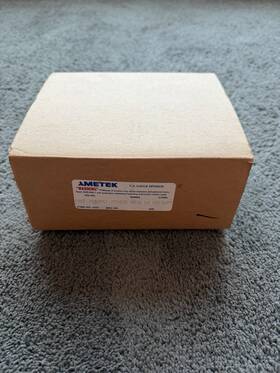
( Brand: Ametek ), ( Manufacturer Part Number: 150055 ), ( Part Type: Gauge ), ( Mounting Position: Side/bottom Mount ), ( Country Of Origin: United States ), ( Maximum Pressure: 1500 Psi )
Review AMETEK Gauge 1500 Psi Lm
The **Ametek 150055 Gauge (Model 1982-1500 D21B)** is a precision-engineered, high-performance pressure gauge designed for demanding industrial, manufacturing, and process control applications where accuracy, durability, and reliability are paramount. This gauge belongs to Ametek s **Dynisco 1982 series**, renowned for its robust construction and superior performance in environments where harsh conditions, frequent cycling, or high-pressure fluctuations are encountered. The **1500 D21B** variant is specifically configured for **1500 psi (10.34 bar) maximum working pressure**, making it ideal for systems where moderate to high-pressure monitoring is required, such as hydraulic systems, pneumatic controls, compressed air networks, or fluid power applications.
Crafted with **stainless steel housing and dial**, this gauge offers exceptional resistance to corrosion, temperature variations, and mechanical stress, ensuring long-term operational integrity even in corrosive or abrasive environments. The **2.5-inch (63.5 mm) dial face** provides a clear, easy-to-read display with bold, high-contrast numbering and indexing, allowing operators to quickly assess pressure levels without ambiguity. The **D21B process connection** features a **1/4-inch NPT (National Pipe Thread) male fitting**, compatible with a wide range of piping systems, while the **back connection** includes a **1/4-inch NPT female port**, enabling flexible installation options for direct mounting or integration into existing instrumentation panels.
One of the standout features of this gauge is its **dual-process design**, which allows it to be filled with either **glycerin or silicone oil** as the process fluid, depending on the application requirements. Glycerin-filled models are suitable for general-purpose use, offering good temperature stability and visibility, while silicone oil-filled variants provide enhanced performance in extreme temperatures, from **-40 F to 250 F (-40 C to 121 C)**, making them ideal for high-temperature environments such as automotive testing, aerospace, or industrial heating systems. The **hermetically sealed construction** ensures that the process fluid remains contained, preventing contamination of the system while maintaining consistent gauge accuracy over time.
The **Ametek 1982 series** incorporates a **bellows-type movement**, which delivers superior repeatability, hysteresis resistance, and minimal zero drift compared to traditional bourdon tube designs. This advanced mechanism ensures that the gauge provides **accurate readings ( 2% of full scale)** even after prolonged exposure to pressure cycles or environmental stress. The **aluminum or stainless steel case** options further enhance protection against physical damage, while the **screw-type mounting** allows for secure installation on panels, pipes, or machinery without compromising performance.
Beyond its technical specifications, the **150055 gauge** is engineered with **user convenience in mind**, featuring a **backlit or non-backlit dial** (depending on the variant) for improved visibility in low-light conditions. The **quick-connect or threaded process connection** simplifies installation and maintenance, reducing downtime in critical applications. Whether deployed in a **factory automation setting, hydraulic press system, or pneumatic control panel**, this gauge delivers the precision and reliability expected from Ametek s legacy of industrial instrumentation, ensuring that operators can trust its performance in both routine and high-stakes operations.
The **Ametek 150055 gauge (1982 model, 1500 D21B)** is a vintage analog pressure gauge, likely used in industrial or mechanical applications. Below is a detailed breakdown of its pros and cons, followed by a conclusion and recommendation.
---
### **Pros**
1. **Reliability and Durability**
The Ametek brand (now part of Emerson) has a long-standing reputation for manufacturing robust, high-quality instrumentation. The 1500 series gauges were designed for industrial environments, meaning they are built to withstand harsh conditions, including temperature fluctuations, vibration, and exposure to dust or moisture. The 1982 model, while older, was likely constructed with durable materials like cast iron or steel casings, which can last decades with proper maintenance.
2. **Accuracy and Precision**
Analog pressure gauges like this one are often calibrated to high standards, providing precise readings within their specified range (e.g., 0-1500 PSI or similar). The D21B variant may include features like a **dial indicator** or **needle damping** to reduce hysteresis and ensure stable readings. For applications where consistency is critical (e.g., hydraulic systems, pneumatic controls, or HVAC), this can be a significant advantage over cheaper or poorly maintained gauges.
3. **Compatibility and Standardization**
This gauge is likely designed to fit standard **1/2" or 3/4" pipe connections**, making it easy to integrate into existing systems. The **1500 series** was widely used in industrial settings, so replacement parts (e.g., seals, diaphragms, or springs) may still be available through Ametek or third-party suppliers. The **D21B** designation might indicate a specific type of movement (e.g., diaphragm or bellows) or a particular mounting style, which could be beneficial for retrofitting older equipment.
4. **Legacy System Integration**
If you are working with **vintage machinery, automotive systems, or specialized industrial equipment**, this gauge may be the only compatible option. Many older systems were designed with analog gauges, and replacing them with digital alternatives could require costly modifications or may not be feasible. In such cases, a well-maintained Ametek gauge can be a cost-effective solution.
5. **Low Maintenance Requirements**
Unlike electronic or digital gauges, analog pressure gauges have fewer moving parts that can fail over time (assuming the internal mechanism is intact). As long as the **bourdon tube, seal, and dial** are functional, the gauge can continue to operate with minimal upkeep. Basic maintenance (e.g., cleaning, checking for leaks, and ensuring the connection is tight) can extend its lifespan significantly.
6. **Visual Clarity and Readability**
Analog gauges provide a **direct, immediate visual indication** of pressure, which can be crucial in manual operations where quick decision-making is required. The large dial and clear markings on the 1500 series make it easy to read even in low-light conditions, a feature that digital gauges may lack in some industrial settings.
7. **Resale or Trade-In Value**
Given its age and brand reputation, a well-preserved Ametek 1500 gauge may still hold some resale value, especially if it is in working condition. It could be traded in for parts or sold to collectors of vintage instrumentation.
---
### **Cons**
1. **Age-Related Wear and Potential Failure**
The **1982 manufacturing date** means this gauge has been in service for nearly 40 years. Over time, components like the **bourdon tube, seal, or spring** can degrade, leading to:
- **Inaccurate readings** (e.g., needle drifting, slow response).
- **Internal leaks** (if the seal or diaphragm fails).
- **Stiff or stuck movement** (due to corrosion or wear).
Testing the gauge for accuracy and functionality is essential before purchasing.
2. **Limited Digital Features**
Unlike modern digital gauges, this analog model lacks features such as:- **Data logging or memory functions**.
- **Remote monitoring capabilities**.
- **Alarm thresholds or digital outputs**.
If your application requires these features, you may need to pair this gauge with additional instrumentation, increasing complexity and cost.
3. **Calibration and Maintenance Needs**
Analog gauges require **periodic calibration** to ensure accuracy. Over time, the internal mechanism can drift, and without regular calibration (e.g., every 1-2 years), the readings may become unreliable. This adds to the long-term cost of ownership compared to digital gauges, which often have self-diagnostic or auto-calibration features.
4. **Potential for Corrosion or Damage**
If the gauge has been exposed to **moisture, chemicals, or extreme temperatures**, internal corrosion could have occurred. Rust in the movement or casing can cause binding or leaks. A thorough inspection (or a professional test) is necessary to assess its condition.
5. **Replacement Parts Availability**
While Ametek (Emerson) may still carry some parts for older models, availability can be limited. If the gauge fails, sourcing a replacement **bourdon tube, seal, or dial** may be difficult or expensive. Digital alternatives often have more readily available replacement components.
6. **No Built-In Safety Features**
Analog gauges typically lack **overload protection** or **auto-shutoff mechanisms**. If the pressure exceeds the gauge s range, it could lead to **permanent damage** or **explosive failure** in high-pressure systems. Modern digital gauges often include safety features like **pressure limits and automatic shutdowns**.
7. **Human Error in Reading**
Unlike digital displays, analog gauges require **interpretation by an operator**, which can introduce errors. Factors like **parallax (reading at an angle), needle ambiguity (e.g., 12 vs. 1 o clock), or poor lighting** can lead to misreadings, potentially causing operational issues.
8. **Environmental Sensitivity**
While robust, analog gauges can be affected by:- **Vibration** (causing needle oscillation).
- **Extreme temperatures** (affecting accuracy).
- **Magnetic fields** (if the gauge has a magnetic back, it may stick to metal surfaces).
Digital gauges are generally more resistant to these environmental factors.
---
### **Conclusion**
The **Ametek 150055 gauge (1982, 1500 D21B)** is a **high-quality, durable analog pressure gauge** with strengths in reliability, precision, and compatibility with legacy systems. It is well-suited for **industrial, mechanical, or automotive applications** where analog readings are preferred, and where digital alternatives are impractical or costly to implement.
However, its **age introduces risks of wear, calibration drift, and limited part availability**. If the gauge is **functioning correctly and well-maintained**, it can be a **cost-effective and reliable choice**, especially for retrofitting older equipment. If it shows signs of **corrosion, leaks, or inaccuracy**, it may require **repair or replacement**, which could offset its long-term value.
For **new installations or applications requiring advanced features** (e.g., data logging, remote monitoring, or safety alarms), a **modern digital pressure gauge** would be a better investment despite a higher upfront cost.
---
### **Recommendation**
1. **If purchasing for a known-working gauge:**- **Test it thoroughly** for accuracy, leaks, and smooth operation before use.
- **Check the internal mechanism** (e.g., bourdon tube, seal) for signs of wear or corrosion.
- **Calibrate it** if possible, or have it professionally tested to ensure reliability.
- **Use it in applications where analog readings are acceptable** (e.g., manual monitoring, legacy systems).
- **Keep spare parts** (e.g., seals, dials) on hand for future maintenance.
2. **If considering for a new system:**- **Evaluate whether an analog gauge is necessary** digital gauges may offer better long-term value with features like data logging and safety alerts.
- **Assess the cost of maintenance** (calibration, repairs) against the gauge s lifespan.
- **Verify part availability** contact Ametek/Emerson or suppliers to confirm if replacement components are still accessible.
3. **If the gauge is damaged or unreliable:**- **Do not use it in critical applications** (e.g., high-pressure systems) until repaired or replaced.
- **Consider upgrading to a modern digital gauge** if the application allows for it, as it may reduce long-term operational risks.
**Final Verdict:**The Ametek 150055 gauge is a **solid vintage instrument** with merit for specific use cases, particularly in **legacy systems or manual monitoring roles**. However, its age and potential for failure mean it should be **evaluated carefully before purchase**. If you can confirm its **current functionality and obtain proper maintenance**, it remains a **practical and durable option**. Otherwise, a **digital replacement** may be the more future-proof choice.
Details:
You are buying a Ametek 1500 psi Gauge. And get Free Shipping.
part #: 150055 price
- $25.00
specifications pressureswitchiz:
- brand: Ametek
- mpn: 150055
- part type: Gauge
- mounting position: Side/bottom Mount
- country of origin: United States
- maximum pressure: 1500 Psi
shipping pressureswitchiz:
- cost: $0.00
- carrier: USPS
- service: USPS Ground Advantage
- class: Standard
- type: Calculated
- transit: 5-11 Days
payments pressureswitchiz:
- credit card: Discover
- wallet: Google-pay
- other
seller pressureswitchiz:
- rating: 97.5%
- city: Fairbanks, Alaska
- # reviews: 448
offer pressureswitchiz:
- options: Ship-to-home
- availability: In Stock
- started: February 19, 2026
- best offers: True
- quantity: 1
- sold: 0
general pressureswitchiz:
- condition: New Open box
- Business Industrial > Hydraulics, Pneumatics, Pumps Plumbing > Air Pressure Gauges
returns pressureswitchiz:
- policy: No Returns
Ametek 150055 Is Similar To:
- 154604 154604 Ametek Us Gauge Stainless (37% similar) Ref any place other than lower 48 states, contact me for shipping before paying...(March 17th, 2017)
- 0-60-1-4-cp Tl3447 Ametek Us Gauge (33.8% similar) Gauge chrome plated housing and removable dial cover not stem mount with brass fittings for 1/8 poly tubing accessories please review pictures one assembly price note: several units available LOCATION6. New unit with accessories Ametek us gauge to 60 psi...(October 4th, 2017)
- 005506 Ametek Us Gauge Pressure Connector Look (43.7% similar) Packaging, bubble wrap, boxes, padded envelopes. Part psi MAX1 4 male pipe fitting on bottom. I love old stuff. Found in a box of spare replacement parts for his air spraying set-up. P500 fig no. This is untested, and being sold as-is. This offer is for a Ametek us gauge division fig P500 pressure. ...(August 20th, 2018)
- 005561a Ametek Gauge 41-2 200psi (54.8% similar) This is a new in box Ametek gauge 200PSI 1/4 not. Box may show some signs of wear...(January 25th, 2018)
- 00561a Ametek Usg Gauge Series Utility Npt Psi Nib (46.2% similar) 5 dial size, 1/4 not lower mount connection, brass whetted material, and steel case material. Pressure range GAUGE0-200 swatted material accuracy range greater than 2 case location gauge lower mount connection size GAUGE1 4 reputedly GAUGE4. The Ametek us gauge 005561A is a 500 series utility ...(September 5th, 2018)
- 02-03-00-a2 Ametek Gauge New In Box (39.5% similar) If another carrier such as ups or FedEx is required to ship due the size, then shipping costs may change...(March 9th, 2018)
- 047103 Ametek Gauge To Vacuum Face Npt Tap New Ga (33.3% similar) To 30 vacuum gauge face not tap this has a 1/4 back tap connection. Metal case with plastic lens. Dial indications are from of vacuum. This item shipped to us. For use on vacuum brakes or steam engines exhausting to a condenser. A good quality gauge, made in the USA...(October 17th, 2018)
- 050653 P-500 Ametek Us Gauge Lot Pressure Gauges Psi Cbm (45.4% similar) ...(September 23rd, 2018)
- 07-10100 Ametek Pressure Gauge Brand (36.4% similar) Pressure gauge. Fast free shipping...(December 20th, 2017)
- Ametek 2 0-300 10894 Gauge Indicator Usg 1 Nos Pressure (43.8% similar) The face has USCG, us. Please review information and numbers. No, 2/1 2 fig can't make out numbers or letters. This is a pressure gauge made by Ametek us gauge, in the original box. The gauge is sold as is with no reserve. The box has a few stains, wrinkles, and discoloration, some numbers has faded...(January 31st, 2015)
- 110792 P1535 Ametek New Usg Pressure Gauge Npt (32.2% similar) X lbs shipping DIMENSIONS:7...(May 29th, 2018)